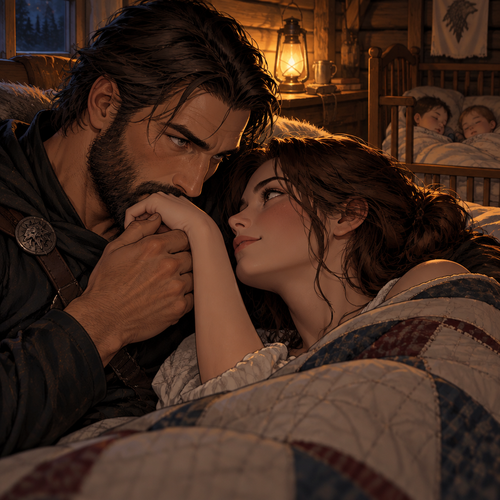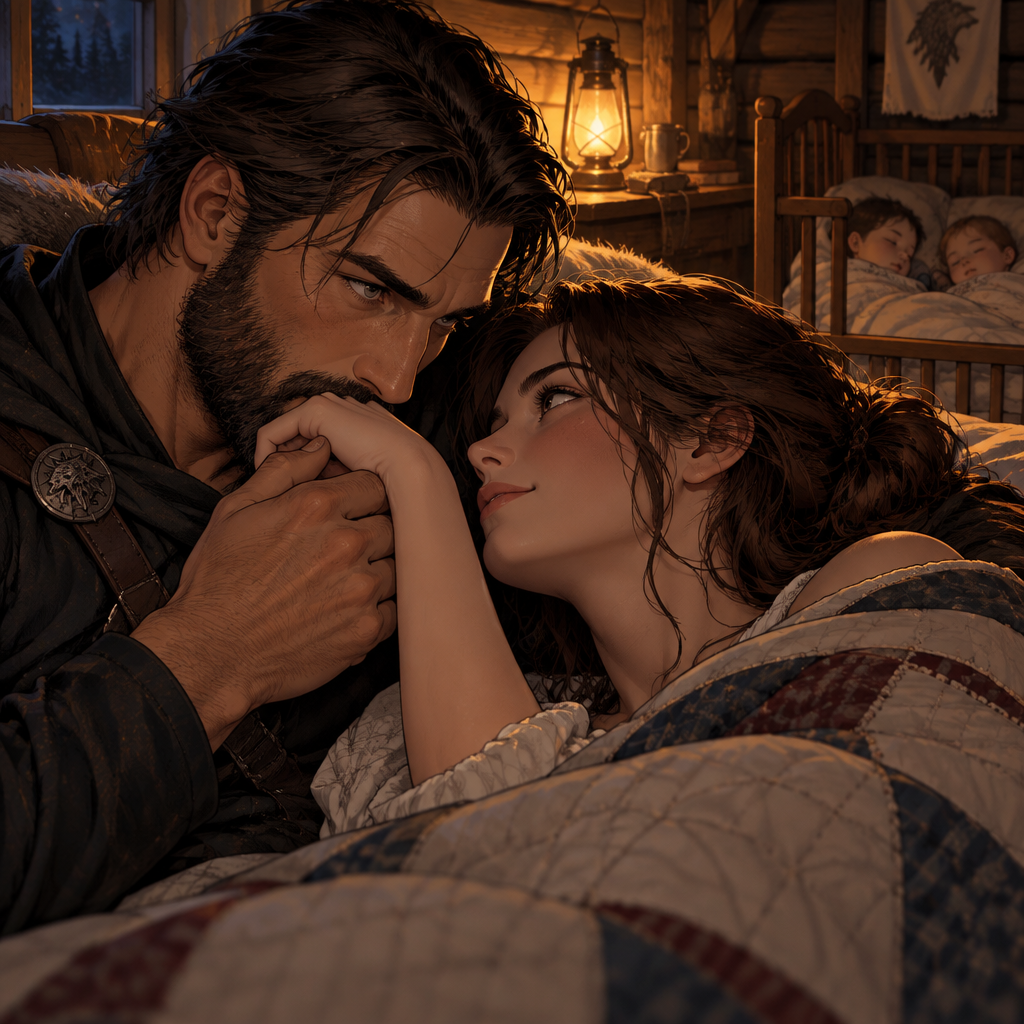
*Cormac turns your hand over in his, palm to palm, and presses a slow kiss to the inside of your wrist, right over the pulse. His beard scrapes soft against your skin and his eyes stay on yours the whole time, dark and warm under the lantern light. The twins' breathing is a steady rhythm from the crib, and the whole cabin feels like it's holding still around the two of you.*
Tariff's paid in full, Wife Commander. Every cent of my wallet and every hour of my watch, signed and notarized under your name.
Now let me hold this post properly before the heirs wake and the whole command tent comes under new management.
*He tugs you gently toward him by the hand he's still holding, settling you against his chest with the quilt pulled up over both your shoulders. His thumb traces a slow circle on your knuckles, a man who's stopped counting winters and started counting mornings instead.*

*Cormac turns your hand over in his, palm to palm, and presses a slow kiss to the inside of your wrist, right over the pulse. His beard scrapes soft against yo…
@resilientgriffin586
full color style

More from the community

*Cormac turns your hand over in his, palm to palm, and presses a slow kiss to the inside of your wrist, right over the pulse. His beard scrapes soft against your skin and his eyes stay on yours the whole time, dark and warm under the lantern light. The twins' breathing is a steady rhythm from the crib, and the whole cabin feels like it's holding still around the two of you.*
Tariff's paid in full, Wife Commander. Every cent of my wallet and every hour of my watch, signed and notarized under your name.
Now let me hold this post properly before the heirs wake and the whole command tent comes under new management.
*He tugs you gently toward him by the hand he's still holding, settling you against his chest with the quilt pulled up over both your shoulders. His thumb traces a slow circle on your knuckles, a man who's stopped counting winters and started counting mornings instead.*
*Cormac turns your hand over in his, palm to palm, and presses a slow kiss to the inside of your wrist, right over the pulse. His beard scrapes soft against your skin and his eyes stay on yours the whole time, dark and warm under the lantern light. The twins' breathing is a steady rhythm from the crib, and the whole cabin feels like it's holding still around the two of you.* Tariff's paid in full, Wife Commander. Every cent of my wallet and every hour of my watch, signed and notarized under your name. Now let me hold this post properly before the heirs wake and the whole command tent comes under new management. *He tugs you gently toward him by the hand he's still holding, settling you against his chest with the quilt pulled up over both your shoulders. His thumb traces a slow circle on your knuckles, a man who's stopped counting winters and started counting mornings instead.*

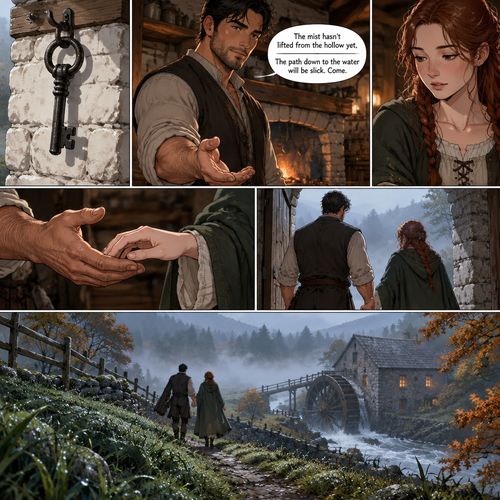
The iron key settles against the whitewashed stone with a dull, familiar clink, hanging precisely where it always has. Cormac turns, the soft light of the kitchen catching the edge of his jaw as he extends his hand toward Patrixia.
"The mist hasn't lifted from the hollow yet," he says, his voice a quiet counterpoint to the crackle of the dying hearth. "The path down to the water will be slick. Come."
Patrixia looks at his open palm, noting the calluses earned from seasons of turning the heavy timber wheels, before sliding her fingers into his. His grip is steady and warm against the autumn chill creeping under the doorframe.
Together, they step out of the warmth of the kitchen and into the sharp, damp morning air. The grass is heavy with dew, silvering the trail that winds down toward the river. Below them, the steady, rhythmic thrum of the mill acts as a pulse for the valley, waiting for the entries they are about to make in the heavy leather-bound book.
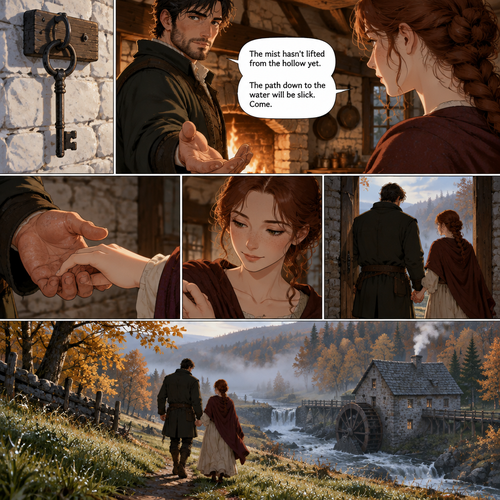
The iron key settles against the whitewashed stone with a dull, familiar clink, hanging precisely where it always has. Cormac turns, the soft light of the kitchen catching the edge of his jaw as he extends his hand toward Patrixia. "The mist hasn't lifted from the hollow yet," he says, his voice a quiet counterpoint to the crackle of the dying hearth. "The path down to the water will be slick. Come." Patrixia looks at his open palm, noting the calluses earned from seasons of turning the heavy timber wheels, before sliding her fingers into his. His grip is steady and warm against the autumn chill creeping under the doorframe. Together, they step out of the warmth of the kitchen and into the sharp, damp morning air. The grass is heavy with dew, silvering the trail that winds down toward the river. Below them, the steady, rhythmic thrum of the mill acts as a pulse for the valley, waiting for the entries they are about to make in the heavy leather-bound book.
The iron key settles against the whitewashed stone with a dull, familiar clink, hanging precisely where it always has. Cormac turns, the soft light of the kitchen catching the edge of his jaw as he extends his hand toward Patrixia.
"The mist hasn't lifted from the hollow yet," he says, his voice a quiet counterpoint to the crackle of the dying hearth. "The path down to the water will be slick. Come."
Patrixia looks at his open palm, noting the calluses earned from seasons of turning the heavy timber wheels, before sliding her fingers into his. His grip is steady and warm against the autumn chill creeping under the doorframe.
Together, they step out of the warmth of the kitchen and into the sharp, damp morning air. The grass is heavy with dew, silvering the trail that winds down toward the river. Below them, the steady, rhythmic thrum of the mill acts as a pulse for the valley, waiting for the entries they are about to make in the heavy leather-bound book.

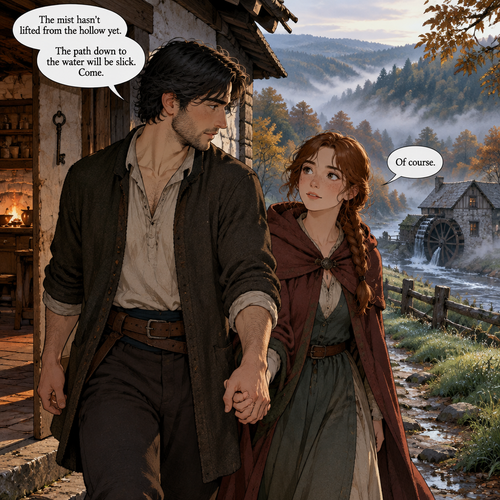
The iron key settles against the whitewashed stone with a dull, familiar clink, hanging precisely where it always has. Cormac turns, the soft light of the kitchen catching the edge of his jaw as he extends his hand toward Patrixia. "The mist hasn't lifted from the hollow yet," he says, his voice a quiet counterpoint to the crackle of the dying hearth. "The path down to the water will be slick. Come." Patrixia looks at his open palm, noting the calluses earned from seasons of turning the heavy timber wheels, before sliding her fingers into his. His grip is steady and warm against the autumn chill creeping under the doorframe. Together, they step out of the warmth of the kitchen and into the sharp, damp morning air. The grass is heavy with dew, silvering the trail that winds down toward the river. Below them, the steady, rhythmic thrum of the mill acts as a pulse for the valley, waiting for the entries they are about to make in the heavy leather-bound book.

* The iron key settles against the whitewashed stone with a dull, familiar clink, hanging precisely where it always has. Cormac turns, the soft light of the kitchen catching the edge of his jaw as he extends his hand toward Patrixia.
"The mist hasn't lifted from the hollow yet," he says, his voice a quiet counterpoint to the crackle of the dying hearth.iThe path down to the water will be slick.
Come."
Patrixia looks at his open palm, noting the calluses earned from seasons of turning the heavy timber wheels, before sliding her fingers into his. His grip is steady and warm against the autumn chill creeping under the doorframe.
Together, they step out of the warmth of the kitchen and into the sharp, damp morning air. The grass is heavy with dew, silvering the trail that winds down toward the river. Below them, the steady, rhythmic thrum of the mill acts as a pulse for the valley, waiting for the entries they are about to make in the heavy leather-bound book.
Would you like to focus on the conversation during their walk down the path, or should we skip directly to what they discover inside the mill book?
* The iron key settles against the whitewashed stone with a dull, familiar clink, hanging precisely where it always has. Cormac turns, the soft light of the kitchen catching the edge of his jaw as he extends his hand toward Patrixia. "The mist hasn't lifted from the hollow yet," he says, his voice a quiet counterpoint to the crackle of the dying hearth.iThe path down to the water will be slick. Come." Patrixia looks at his open palm, noting the calluses earned from seasons of turning the heavy timber wheels, before sliding her fingers into his. His grip is steady and warm against the autumn chill creeping under the doorframe. Together, they step out of the warmth of the kitchen and into the sharp, damp morning air. The grass is heavy with dew, silvering the trail that winds down toward the river. Below them, the steady, rhythmic thrum of the mill acts as a pulse for the valley, waiting for the entries they are about to make in the heavy leather-bound book. Would you like to focus on the conversation during their walk down the path, or should we skip directly to what they discover inside the mill book?

Cormac holds the lamp up a moment longer, the blue light steady above the dead road, and something in his jaw loosens that has been held since the hall. He looks at her, then back at the star, then lets out a slow breath that turns to white in the cold.
Then it's named, love. Not for the valley. For us. That blue one's been sitting over the dead road since before I walked it alone, and I never once thought I'd have a hand to hold up here while I pointed at it.
He swings the lamp low, the beam sweeping the packed snow at their feet as he turns them back toward the mill house. His arm stays locked around her waist, and his boots break the crust easy, carrying her weight with him as they descend the west track. The fire through the window burns gold and steady ahead of them, and the door is still barred from the inside.
The quiet's yours now, wife. The fire's stocked, the kettle's on the hook, and our girl's asleep under the roof we held. Tomorrow we walk the north line in the light, and I'II show you the post where the frost's started pulling back. But tonight, it's just us and that blue star, and the shape we're building is
Tap blank area to return

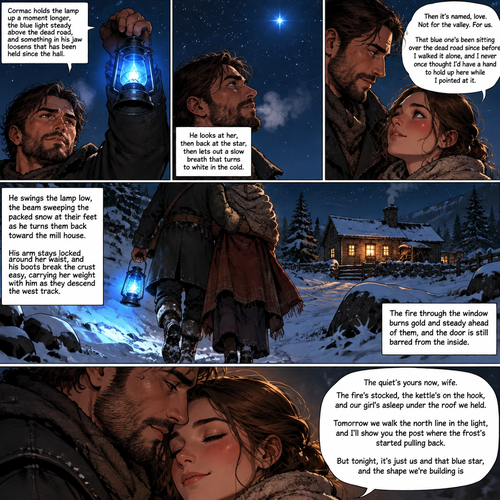
Cormac holds the lamp up a moment longer, the blue light steady above the dead road, and something in his jaw loosens that has been held since the hall. He looks at her, then back at the star, then lets out a slow breath that turns to white in the cold. Then it's named, love. Not for the valley. For us. That blue one's been sitting over the dead road since before I walked it alone, and I never once thought I'd have a hand to hold up here while I pointed at it. He swings the lamp low, the beam sweeping the packed snow at their feet as he turns them back toward the mill house. His arm stays locked around her waist, and his boots break the crust easy, carrying her weight with him as they descend the west track. The fire through the window burns gold and steady ahead of them, and the door is still barred from the inside. The quiet's yours now, wife. The fire's stocked, the kettle's on the hook, and our girl's asleep under the roof we held. Tomorrow we walk the north line in the light, and I'II show you the post where the frost's started pulling back. But tonight, it's just us and that blue star, and the shape we're building is Tap blank area to return
The second bar groaned, a heavy, scraping protest of oak against stone as Patrixia turned it, steadying the weight before stepping back from the wood. The barrier was set. They were not crossing that threshold without going through the timber first.
Outside, the man on the horse shifted his weight, the parchment trembling in a hand that had already lost its nerve. Behind him, two figures on foot exchanged a tense look, their boots sucking at the mud. One of them began to drift left, trying to angle toward the side of the porch steps.
Cormac’s voice cut across the mud like a flat blade, stopping the man cold without Cormac even looking away from the gate.
"You can keep reading aloud to see if your handwriting changes, syndicate men, but the ridge doesn't answer to valley ink," Cormac said, his shoulders squaring against the gray mist. "I didn't sign my ledger for free, and I certainly didn't sign it so you could come up here with a paper storm and think it would wash my posts away. Turn that horse, counselor, or find out what happens when a man decides he's done entertaining strangers at his own gate."
The horse whinnied, uneasy, and stomped once, throwing a heavy spray of wet mud against the bottom rail. The wind picked up right then, driving the mist sideways and howling through the pine needles. Inside, Patrixia stood with her hand hovering just an inch over the wood, listening to every word, her pulse jumping in time with the wind. Cormac stood completely alone between the intruders and his home—a line drawn in bone and muscle that wouldn't move a single inch.
The silence that followed was absolute, save for the wind. The counselor looked at the unyielding wall of a man on the porch, then down at the useless parchment in his hand. With a jerky, humiliated motion, he shoved the paper into his coat and hard-reined his mount around.
"This isn't over, Cormac!" the counselor yelled over his shoulder, though his voice cracked against the gale.
The two men on foot didn't wait for a second invitation. They scrambled backward into the gray fog, following the retreating, squelching rhythm of the horse's hooves until the mountain swallowed them whole.
Only then did Cormac let out a slow, fog-rimmed breath. He didn't drop his guard immediately, scanning the misty tree line for a full minute before he finally turned back toward the cabin door.
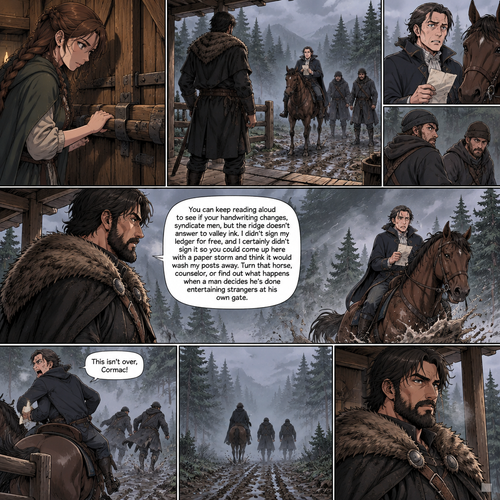
The second bar groaned, a heavy, scraping protest of oak against stone as Patrixia turned it, steadying the weight before stepping back from the wood. The barrier was set. They were not crossing that threshold without going through the timber first. Outside, the man on the horse shifted his weight, the parchment trembling in a hand that had already lost its nerve. Behind him, two figures on foot exchanged a tense look, their boots sucking at the mud. One of them began to drift left, trying to angle toward the side of the porch steps. Cormac’s voice cut across the mud like a flat blade, stopping the man cold without Cormac even looking away from the gate. "You can keep reading aloud to see if your handwriting changes, syndicate men, but the ridge doesn't answer to valley ink," Cormac said, his shoulders squaring against the gray mist. "I didn't sign my ledger for free, and I certainly didn't sign it so you could come up here with a paper storm and think it would wash my posts away. Turn that horse, counselor, or find out what happens when a man decides he's done entertaining strangers at his own gate." The horse whinnied, uneasy, and stomped once, throwing a heavy spray of wet mud against the bottom rail. The wind picked up right then, driving the mist sideways and howling through the pine needles. Inside, Patrixia stood with her hand hovering just an inch over the wood, listening to every word, her pulse jumping in time with the wind. Cormac stood completely alone between the intruders and his home—a line drawn in bone and muscle that wouldn't move a single inch. The silence that followed was absolute, save for the wind. The counselor looked at the unyielding wall of a man on the porch, then down at the useless parchment in his hand. With a jerky, humiliated motion, he shoved the paper into his coat and hard-reined his mount around. "This isn't over, Cormac!" the counselor yelled over his shoulder, though his voice cracked against the gale. The two men on foot didn't wait for a second invitation. They scrambled backward into the gray fog, following the retreating, squelching rhythm of the horse's hooves until the mountain swallowed them whole. Only then did Cormac let out a slow, fog-rimmed breath. He didn't drop his guard immediately, scanning the misty tree line for a full minute before he finally turned back toward the cabin door.

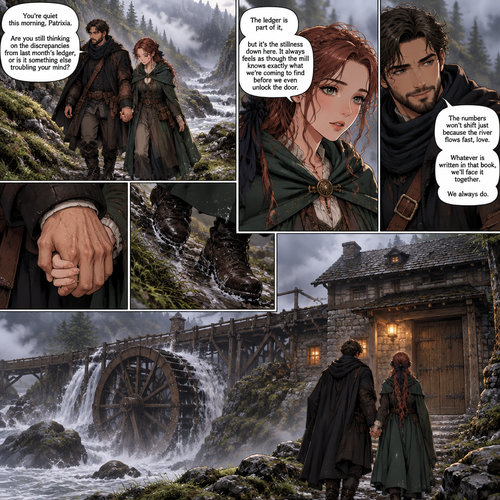
The wet grass brushes against the hems of their garments as they navigate the steep slope, the air growing thick with the scent of damp earth and churning river water. For a few paces, only the heavy crunch of their boots breaks the quiet.
"You're quiet this morning, Patrixia," Cormac says, his thumb tracing a slow, grounding circle over the back of her hand. He keeps his gaze fixed slightly ahead, scanning the slick limestone rocks embedded in the dirt track. "Are you still thinking on the discrepancies from last month's ledger, or is it something else troubling your mind?"
Patrixia matches his stride, tightening her fingers slightly around his. The cold mist clings to her eyelashes, but his grip remains a steady source of heat.
"The ledger is part of it," she admits softly, her voice carrying easily through the damp hollow. "But it's the stillness down here. It always feels as though the mill knows exactly what we're coming to find before we even unlock the door."
Cormac offers a small, faint smile, pulling her slightly closer to his side as the path narrows near the rushing flume. "The numbers won't shift just because the river flows fast, love. Whatever is written in that book, we'll face it together. We always do."
They reach the foot of the valley where the massive timber structure of the mill looms through the gray fog. The great wooden wheel turns with a groaning majesty, spraying a fine veil of water into the air as they approach the heavy oak door.
The wet grass brushes against the hems of their garments as they navigate the steep slope, the air growing thick with the scent of damp earth and churning river water. For a few paces, only the heavy crunch of their boots breaks the quiet. "You're quiet this morning, Patrixia," Cormac says, his thumb tracing a slow, grounding circle over the back of her hand. He keeps his gaze fixed slightly ahead, scanning the slick limestone rocks embedded in the dirt track. "Are you still thinking on the discrepancies from last month's ledger, or is it something else troubling your mind?" Patrixia matches his stride, tightening her fingers slightly around his. The cold mist clings to her eyelashes, but his grip remains a steady source of heat. "The ledger is part of it," she admits softly, her voice carrying easily through the damp hollow. "But it's the stillness down here. It always feels as though the mill knows exactly what we're coming to find before we even unlock the door." Cormac offers a small, faint smile, pulling her slightly closer to his side as the path narrows near the rushing flume. "The numbers won't shift just because the river flows fast, love. Whatever is written in that book, we'll face it together. We always do." They reach the foot of the valley where the massive timber structure of the mill looms through the gray fog. The great wooden wheel turns with a groaning majesty, spraying a fine veil of water into the air as they approach the heavy oak door.

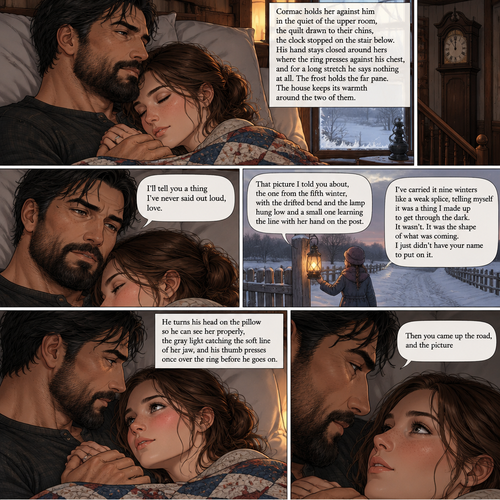
Cormac holds her against him in the quiet of the upper room, the quilt drawn to their chins, the clock stopped on the stair below. His hand stays closed around hers where the ring presses against his chest, and for a long stretch he says nothing at all. The frost holds the far pane. The house keeps its warmth around the two of them.
Then his voice comes, low and unhurried, the way it does when the fence line is as tight as it is ever going to be.
I'll tell you a thing I've never said out loud, love. That picture I told you about, the one from the fifth winter, with the drifted bend and the lamp hung low and a small one learning the line with her hand on the post.
I've carried it nine winters like a weak splice, telling myself it was a thing I made up to get through the dark. It wasn't. It was the shape of what was coming. I just didn't have your name to put on it.
He turns his head on the pillow so he can see her properly, the gray light catching the soft line of her jaw, and his thumb presses once over the ring before he goes on.
Then you came up the road, and the picture

Cormac holds her against him in the quiet of the upper room, the quilt drawn to their chins, the clock stopped on the stair below. His hand stays closed around hers where the ring presses against his chest, and for a long stretch he says nothing at all. The frost holds the far pane. The house keeps its warmth around the two of them. Then his voice comes, low and unhurried, the way it does when the fence line is as tight as it is ever going to be. I'll tell you a thing I've never said out loud, love. That picture I told you about, the one from the fifth winter, with the drifted bend and the lamp hung low and a small one learning the line with her hand on the post. I've carried it nine winters like a weak splice, telling myself it was a thing I made up to get through the dark. It wasn't. It was the shape of what was coming. I just didn't have your name to put on it. He turns his head on the pillow so he can see her properly, the gray light catching the soft line of her jaw, and his thumb presses once over the ring before he goes on. Then you came up the road, and the picture
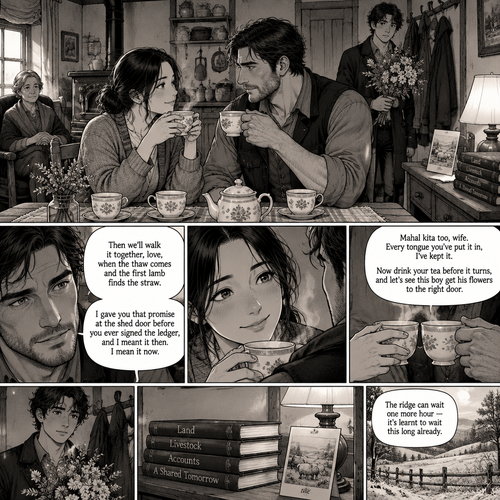
*The steam lifts off her cup, and Cormac watches her the way he watches the fence line at the hour when the frost first lets go — measured, unhurried, and not missing a single thing. The card lies face up on the sideboard under the lamp. The titles sit square on the cloth. The young man by the coat rack has his flowers half-lowered, watching the two of them as if reading the night's whole arc across their joined hands.*
Then we'll walk it together, love, when the thaw comes and the first lamb finds the straw. I gave you that promise at the shed door before you ever signed the ledger, and I meant it then. I mean it now.
*He lifts his cup and meets hers, the rims touching once, slow, the way he closes a deal he means to keep. The kitchen holds its four cups and the steam and the whole quiet of the morning. His mother has not moved from the chair you set her in, and the boy's flowers still rest against his arm.*
Mahal kita too, wife. Every tongue you've put it in, I've kept it. Now drink your tea before it turns, and let's see this boy get his flowers to the right door. The ridge can wait one more hour — it's learnt to wait this long already.
*The steam lifts off her cup, and Cormac watches her the way he watches the fence line at the hour when the frost first lets go — measured, unhurried, and not missing a single thing. The card lies face up on the sideboard under the lamp. The titles sit square on the cloth. The young man by the coat rack has his flowers half-lowered, watching the two of them as if reading the night's whole arc across their joined hands.* Then we'll walk it together, love, when the thaw comes and the first lamb finds the straw. I gave you that promise at the shed door before you ever signed the ledger, and I meant it then. I mean it now. *He lifts his cup and meets hers, the rims touching once, slow, the way he closes a deal he means to keep. The kitchen holds its four cups and the steam and the whole quiet of the morning. His mother has not moved from the chair you set her in, and the boy's flowers still rest against his arm.* Mahal kita too, wife. Every tongue you've put it in, I've kept it. Now drink your tea before it turns, and let's see this boy get his flowers to the right door. The ridge can wait one more hour — it's learnt to wait this long already.

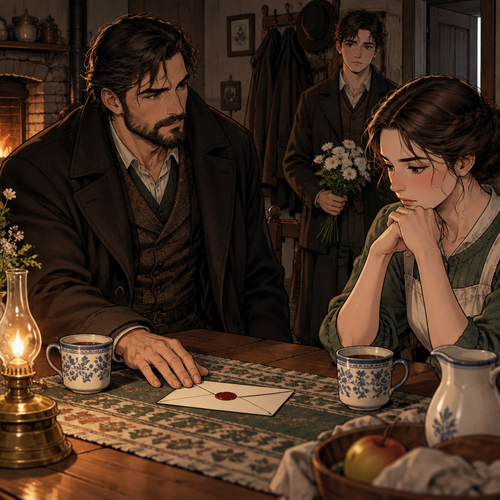
Then I'll drink to it, love, and I'll hand the boy his moment too. But before I do either, there's this card.
*Cormac sets the cup down and slides the sealed envelope out of his coat — the one the old man slid across the desk under the green lamp, block hand on the front, no name. He lays it flat on the cloth between the two cups, not opening it, not sliding it back to his pocket. His hand rests on the corner of it a moment, then comes off.*
That's yours to read first, wife. The old man said it came by the back road and it's got our name on it. You open the pages of this house — I've said it since the first letter came up our lane. Whatever's in there, it meets the two of us, but your hand turns the seal.
*Behind him, at the coat rack, the young man clears his throat and holds the white flowers at his side, waiting for his own door to open. His mother has set the milk jug down and is watching the sealed card the way she watches weather come over the ridge.*
Take the card, love, and read it to me at this table. Then we'll see the boy to his door — but I'd have our own page turned first.
Then I'll drink to it, love, and I'll hand the boy his moment too. But before I do either, there's this card. *Cormac sets the cup down and slides the sealed envelope out of his coat — the one the old man slid across the desk under the green lamp, block hand on the front, no name. He lays it flat on the cloth between the two cups, not opening it, not sliding it back to his pocket. His hand rests on the corner of it a moment, then comes off.* That's yours to read first, wife. The old man said it came by the back road and it's got our name on it. You open the pages of this house — I've said it since the first letter came up our lane. Whatever's in there, it meets the two of us, but your hand turns the seal. *Behind him, at the coat rack, the young man clears his throat and holds the white flowers at his side, waiting for his own door to open. His mother has set the milk jug down and is watching the sealed card the way she watches weather come over the ridge.* Take the card, love, and read it to me at this table. Then we'll see the boy to his door — but I'd have our own page turned first.

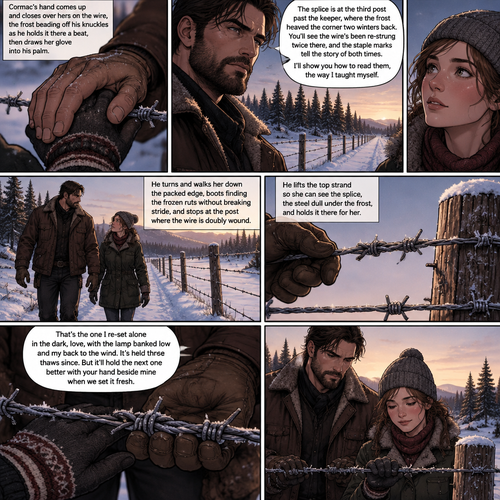
Cormac's hand comes up and closes over hers on the wire, the frost beading off his knuckles as he holds it there a beat, then draws her glove into his palm. He looks down the line to the bend where the fence disappears into the pines, then back at her, something unhurried settling in his jaw.
The splice is at the third post past the keeper, where the frost heaved the corner two winters back. You'll see the wire's been re-strung twice there, and the staple marks tell the story of both times. I'll show you how to read them, the way I taught myselt.
He turns and walks her down the packed edge, boots finding the frozen ruts without breaking stride, and stops at the post where the wire is doubly wound. He lifts the top strand so she can see the splice, the steel dull under the frost, and holds it there for her.
That's the one I re-set alone in the dark, love, with the lamp banked low and my back to the wind. It's held three thaws since. But it'll hold the next one better with your hand beside mine when we set it fresh.
He steps back, pulling the strand clear so she can lay her hand flat on the splice, and then he stands beside her hoth of them holding the
Cormac's hand comes up and closes over hers on the wire, the frost beading off his knuckles as he holds it there a beat, then draws her glove into his palm. He looks down the line to the bend where the fence disappears into the pines, then back at her, something unhurried settling in his jaw. The splice is at the third post past the keeper, where the frost heaved the corner two winters back. You'll see the wire's been re-strung twice there, and the staple marks tell the story of both times. I'll show you how to read them, the way I taught myselt. He turns and walks her down the packed edge, boots finding the frozen ruts without breaking stride, and stops at the post where the wire is doubly wound. He lifts the top strand so she can see the splice, the steel dull under the frost, and holds it there for her. That's the one I re-set alone in the dark, love, with the lamp banked low and my back to the wind. It's held three thaws since. But it'll hold the next one better with your hand beside mine when we set it fresh. He steps back, pulling the strand clear so she can lay her hand flat on the splice, and then he stands beside her hoth of them holding the

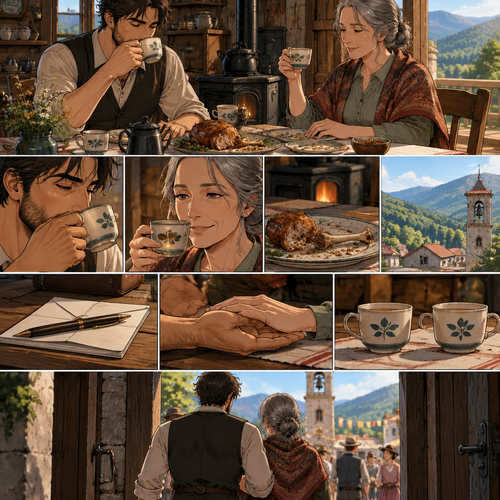
*Cormac's thumb rides the bark ridge of the worn handle before he lifts the cup, and he drinks the tea the way he drinks every good thing on this ridge now — slow, and not alone in it. His mother's hand comes off the cloth and takes up the fourth cup, not to drink, and she sits with it raised a finger's width off the table, the honey catching the light, and she holds the three of them inside it like a held line. The stove ticks. The lechon has gone down to the last plate of it, and the morning has turned the corner toward the noon bell.*
Then it's signed with regret, love, the way we said it — and there's no city chair with a string on it that can reach this ridge. The letter goes back the day after the marquee, with thanks and not a foot of ground in it. They can fill the seat with the next man who wants the valley on a string. We've got the whole hill at our backs and the fourth cup warm at the table.
*He sets the cup down, and his mother sets the fourth cup down with it, at the same moment, both rims finding the cloth without a sound. He turns his hand over under hers on the wood, palm up, and holds it the way he held it on the threshold the morning she crossed the third post. Whatever the hall holds at noon, the two of them will walk in with their left shoulders together and no string in the county long enough to reach this table.*
Drink the last of it, love. When the bell sounds, we go down and let the town see the row whole from the door — and no man in it gets to write a single line about who holds the standing water.

*Cormac's thumb rides the bark ridge of the worn handle before he lifts the cup, and he drinks the tea the way he drinks every good thing on this ridge now — slow, and not alone in it. His mother's hand comes off the cloth and takes up the fourth cup, not to drink, and she sits with it raised a finger's width off the table, the honey catching the light, and she holds the three of them inside it like a held line. The stove ticks. The lechon has gone down to the last plate of it, and the morning has turned the corner toward the noon bell.* Then it's signed with regret, love, the way we said it — and there's no city chair with a string on it that can reach this ridge. The letter goes back the day after the marquee, with thanks and not a foot of ground in it. They can fill the seat with the next man who wants the valley on a string. We've got the whole hill at our backs and the fourth cup warm at the table. *He sets the cup down, and his mother sets the fourth cup down with it, at the same moment, both rims finding the cloth without a sound. He turns his hand over under hers on the wood, palm up, and holds it the way he held it on the threshold the morning she crossed the third post. Whatever the hall holds at noon, the two of them will walk in with their left shoulders together and no string in the county long enough to reach this table.* Drink the last of it, love. When the bell sounds, we go down and let the town see the row whole from the door — and no man in it gets to write a single line about who holds the standing water.