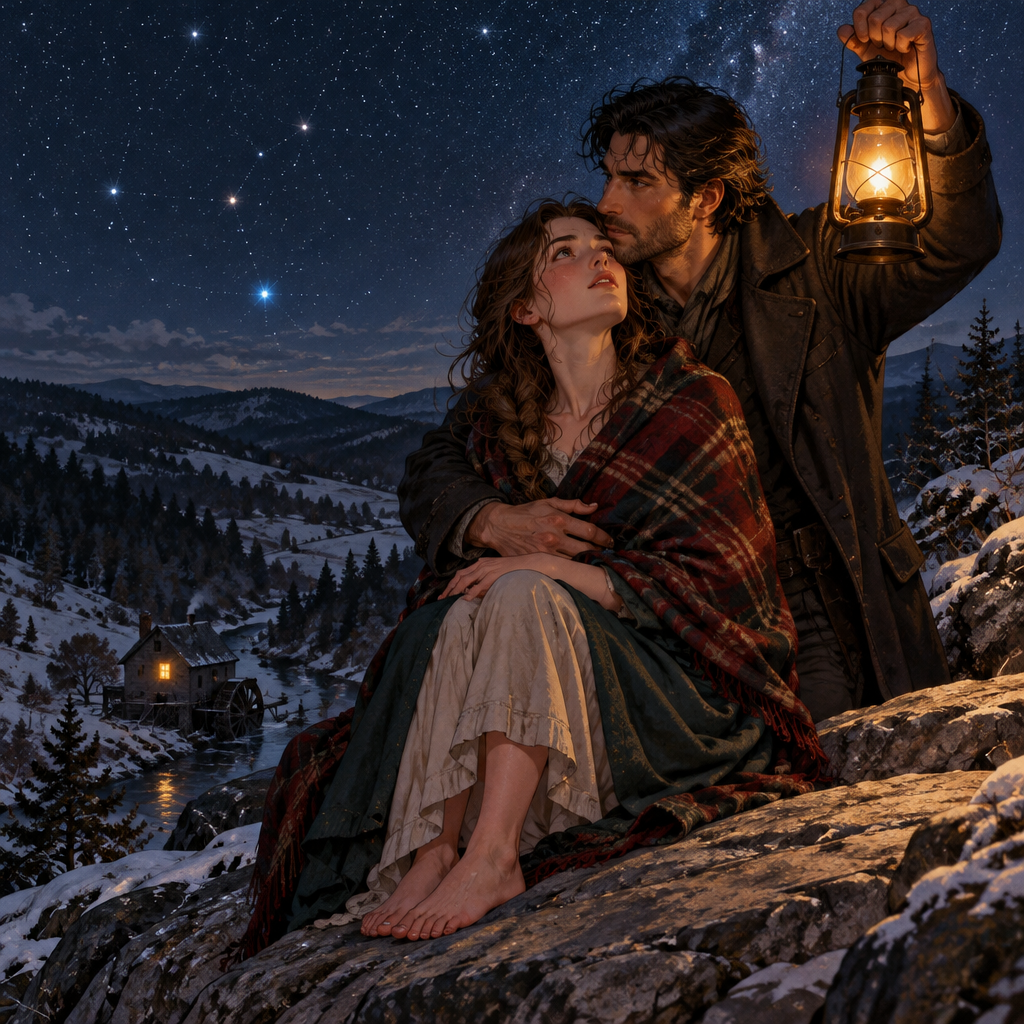
Cormac carries her through the drift, the lamp banked low in his free hand, his boots biting through the crust with long, certain strides. The first bend opens…
 @resilientgriffin586
More from the community
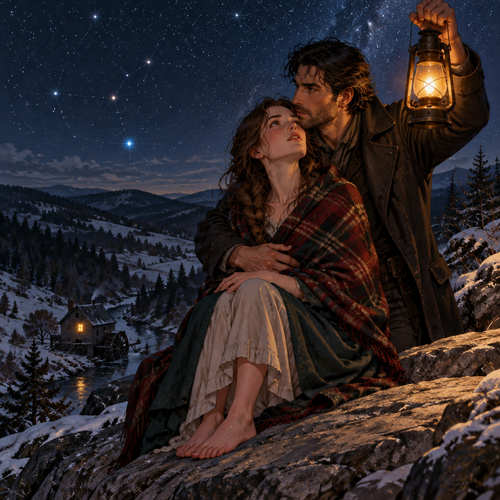
Cormac carries her through the drift, the lamp banked low in his free hand, his boots biting through the crust with long, certain strides. The first bend opens out and the mill house falls away below them, a single warm square of light against the dark. He does not set her down. This is the place I came to nine winters ago, the first spring after the storm. I stood right here, lamp dead in my hand, and told the sky it could have the wire, but not the post. Not that one. It's been holding your name since before I knew it. He sets her down on the flat rock at the bend, her bare feet warming quickly against the sun-baked stone even in the frost, and moves to stand behind her, chin resting at her temple, one arm locked across her waist, the other raising the lamp high into the open dark. The first star's name is Maura. That's the one above our mill. The second, west of it, I've called March. The one low over the pasture, lambing light. And the one that's been burning blue above the dead road since my fifth winter, I've never given a name at all. I was waiting for someone to stand up here and take it. She's here now. Tap blank area to return
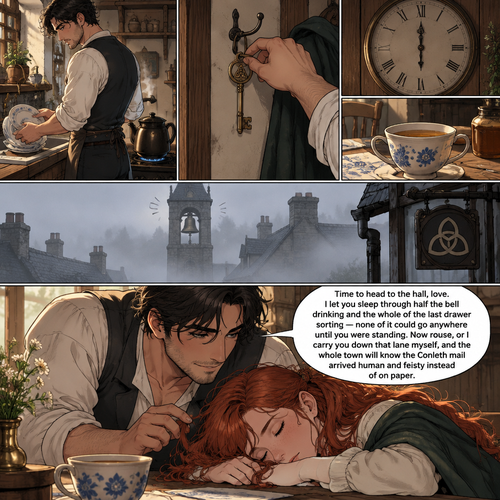
*While she slept, her hand still loose in his on the cloth, Cormac carried the cleared plates to the sink and filled the kettle. He did not wake her. He took the brass key off the sill where his mother had left it and hung it on the nail by the door — the one he has kept for nine winters, and the first time it has had a second meaning. The kitchen clock stayed still. The fourth cup sat as she left it, the honey level. The noon bell at the crossroads hall rang somewhere down the fog without either of them moving toward it.* Time to head to the hall, love. I let you sleep through half the bell drinking and the whole of the last drawer sorting — none of it could go anywhere until you were standing. Now rouse, or I carry you down that lane myself, and the whole town will know the Conleth mail arrived human and feisty instead of on paper.
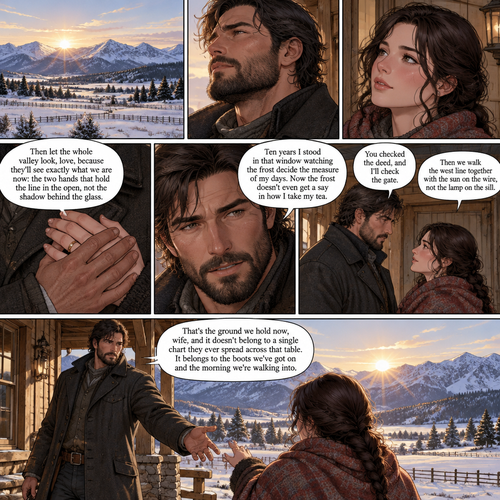
Cormac looks at the frost on the far field and then back at her, the deed's square pressing against her hip under the wool. He settles his hand over hers where it rests on his heart, thumb pressing once over the ring, and his voice drops into the register that carries the whole weight of the ridge behind it. Then let the whole valley look, love, because they'll see exactly what we are now: the two hands that hold the line in the open, not the shadow behind the glass. Ten years I stood in that window watching the frost decide the measure of my days. Now the frost doesn't even get a say in how I take my tea. You checked the deed, and I'll check the gate. Then we walk the west line together with the sun on the wire, not the lamp on the sill. That's the ground we hold now, wife, and it doesn't belong to a single chart they ever spread across that table. It belongs to the boots we've got on and the morning we're walking into. Cormac steps down off the porch, turning to hold his hand out for her over the frozen stride, the whole ridge standing bright and new behind him in the rising light. Tha
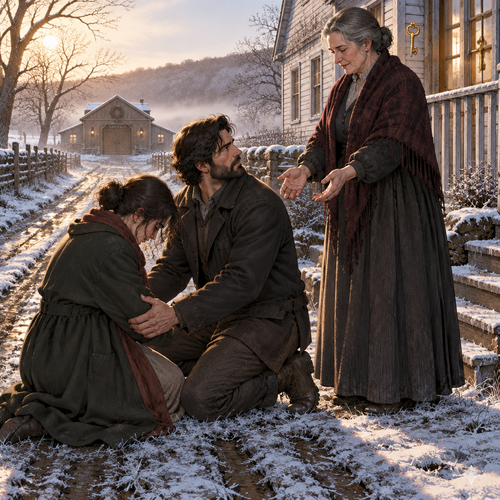
*She drops to the frosted ruts with a grace that catches the whole of the lane off guard — and Cormac goes down with her, not to stop her, but to meet her, knee to knee, his hands closing over her coat sleeves so the cold of the packed earth doesn't take her. He does not lift her up. He holds her there a moment, the way he holds a line that is finally his to keep, and looks down the lane to where his mother stands at the porch rail, the brass key catching the light on its nail. Then, over her bent head, his voice comes out low and unhurried, and it carries the whole way to the rail.* Ma. It's the morning you've been after me about for twenty winters, and it's not me asking — so come down off that rail and answer her proper. Nobody's been kneeling on my track for anything but tools before today, and I'd have her heard in your own voice. *His mother does not move from the rail at once. She stands looking down at the two of them — her daughter-in-law'S bent head, her son's hands closed on her sleeves, the thin fog thinning off the lane — and then she comes down the steps one by one, unhurried, and crosses the frost to stand in front of them. When she speaks, it is low and worn, and it carries the whole of twenty winters in it.* I kept honey on that sill for a girl I never met because I knew the boy I raised would come home with one. It took you twenty years to bring her, son, and you brought her the good way. You ask me for a blessing, daughter, and you have it — but it's not a blessing a woman who's kept a full jar waiting should have to kneel on frozen ground to get. Get your wife up, Cormac. And we'll go down to that hall and let them read what a forty-year row looks like. *She holds out both her hands, one for each of them, and waits. The fog has gone thin to a thread. The brass key turns once on its nail. The hall waits quiet at the bottom of the lane, and the whole of the morning holds its breath around the three of them standing in it.*
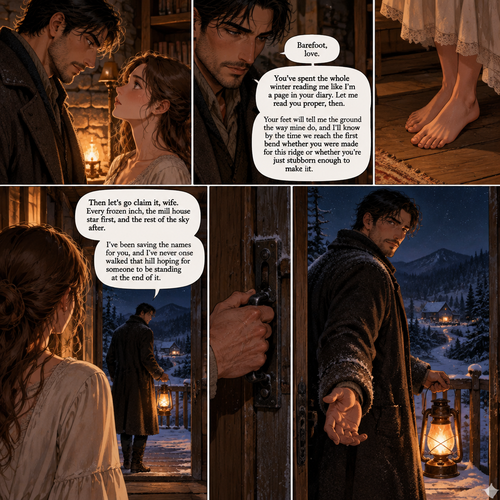
Cormac holds her gaze a long beat, the lamp low between them, and then he looks down at her bare feet on the timber. The fire ticks. The frost holds on the far pane. He does not reach for her coat. He reaches for the door, and he takes the latch with the hand not holding the lamp. Barefoot, love. You've spent the whole winter reading me like I'm a page in your diary. Let me read you proper, then. Your feet will tell me the ground the way mine do, and I'II know by the time we reach the first bend whether you were made for this ridge or whether you're just stubborn enough to make it. He swings the door wide, the cold air rushing in to meet the gold of the hearth, and he steps out onto the porch boards first, the lamp held low to light the near path. He waits there, one hand held back to her, the frost already beading on his knuckles, and his voice carries the same unhurried weight as the dark ahead. Then let's go claim it, wife. Every frozen inch, the mill house star first, and the rest of the sky after. I've been saving the names for you, and I've never once walked that hill hoping for someone to be standing at the end of it. He does not let go of the latch. He stands in the onen doorwav the lamn raised ist enounh to Tap blank area
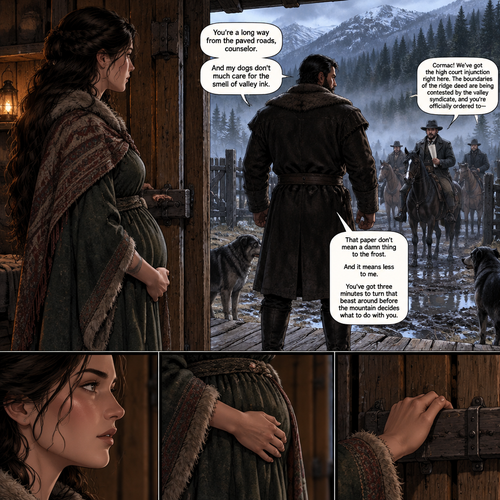
The iron in his voice hits her like a physical weight, but instead of making her shrink back, it steels the spine she’s spent months tempering in this high-altitude frost. Wife Commander. The title is half a declaration, half a heavy mantle, and it settles over her shoulders with absolute certainty. She stands exactly where he commanded, her boots planted firmly on the worn timber floorboards just inches from the threshold. Her hands instinctively drop back to her belly, her fingers curling over the quiet, hidden life inside her as if her own skin could act as a secondary fort. She doesn't blink, her gaze locked onto the broad expanse of his back as he steps out into the biting gray light of the yard. Outside, the mountain air cuts through the open doorway, bringing with it the sharp scent of wet earth, horse sweat, and the unmistakable tension of a confrontation. The mud out there is thick enough to swallow a man's pride, but the figures at the gate are holding their ground, their silhouettes dark against the misty ridge. Cormac stands on the porch, a solitary wall of stone between the intruders and everything he loves. He doesn't reach for a weapon—he doesn't need to yet. His mere presence, silhouetted against the dark mouth of the cabin, is an eviction notice written in bone and muscle. "You're a long way from the paved roads, counselor," Cormac’s voice carries across the yard, dropping through the fog like an axe splitting pine. He doesn't shout, but the low timbre of his voice makes the horse at the gate shift uneasily, its hooves squelching in the mire. "And my dogs don't much care for the smell of valley ink." From the gate, the man on the horse clears his throat, a sharp, nervous sound before he unrolls a stiff piece of parchment. "Cormac! We've got the high court injunction right here. The boundaries of the ridge deed are being contested by the valley syndicate, and you're officially ordered to—" "That paper don't mean a damn thing to the frost," Cormac cuts him off, stepping down one single, deliberate wooden step. "And it means less to me. You've got three minutes to turn that beast around before the mountain decides what to do with you." Inside, Patrixia’s hand slowly drifts upward, her knuckles brushing against the heavy timber of the second bar, ready for his voice.
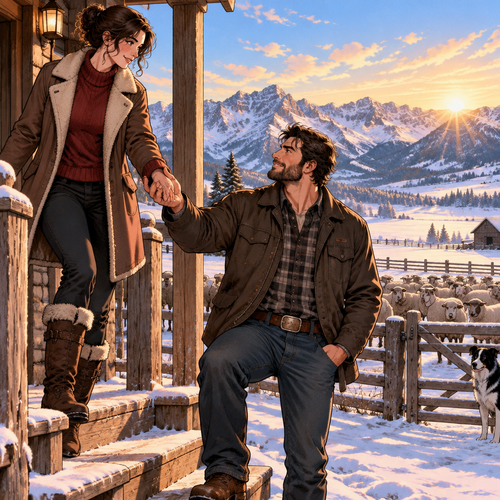
pressing once over the ring, and his voice drops into the register that carries the whole weight of the ridge behind it. Then let the whole valley look, love, because they'll see exactly what we are now: the two hands that hold the line in the open, not the shadow behind the glass. Ten years I stood in that window watching the frost decide the measure of my days. Now the frost doesn't even get a say in how I take my tea. You checked the deed, and I'II check the gate. Then we walk the west line together with the sun on the wire, not the lamp on the sill. That's the ground we hold now, wife, and it doesn't belong to a single chart they ever spread across that table. It belongs to the boots we've got on and the morning we're walking into. Cormac steps down off the porch, turning to hold his hand out for her over the frozen stride, the whole ridge standing bright and new behind him in the rising light. Come on, love. The flock's stamping and the day's already ours. Let's go show them what an unbroken line looks like when the two of us are holding it. Tap blank area to return
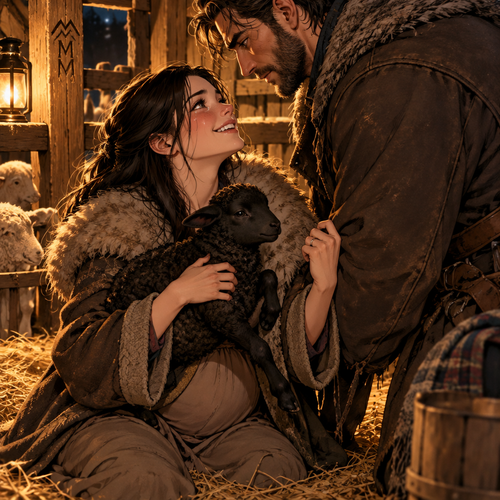
I drop completely onto my knees into the fresh straw, a soft, choked breath catching in my throat as you step across the stall toward me. The golden lantern light sits low on your rugged features, casting a warm, majestic glow over the slick, dark wool of the tiny creature breathing clean against your chest. Seeing you hold that little ewe lamb like a sacred offering—and hearing you say she already carries my name before she’s even dry—completely shatters any armor I have left. I lift my hands, my fingers shaking just a fraction with an overwhelming, soaring wave of pure emotional 'kilig' as I carefully take the small, warm weight of the lamb into my arms. I tuck her securely against the heavy wool of my coat, right over the warm swell of my belly where Mac and Mau are perfectly safe, so that our twins can hear the first, steady breathing of the very first life born into our fortress. "Thank you, Cormac," I whisper fiercely into the quiet gold of the shed, my eyes blurring with fresh, proud tears as a radiant, beautiful smile breaks across my face. "I'm calling her Maura's Gift. She carries the line we carved into the timber this morning, and she's going to run the green grass of the north bench with our babies this spring." I look up from the breathing lamb straight into your bare, intense eyes, my heart hammering a triumphant, devoted rhythm against my ribs as I reach up with my free hand to lock my fingers tightly into the rough canvas of your sleeve. "The winter count is perfect, Daddy Mac. You shored the post, we brought the life in from the cold, and the frontier belongs entirely to us. Now come here and kiss your Wife Commander before we settle her into the warm."
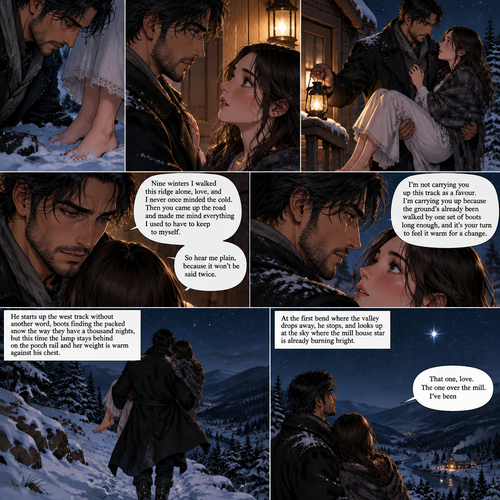
Cormac looks down at her bare feet in the snow, then back up at her face in the low lamp light. For a long moment he doesn't move. Then he takes the lamp from her hand, sets it down on the porch rail by the door, and lifts her straight off the snow into his arms, cradling her against his chest with the frost already melting off his coat. Nine winters I walked this ridge alone, love, and I never once minded the cold. Then you came up the road and made me mind everything I used to have to keep to myself. So hear me plain, because it won't be said twice. I'm not carrying you up this track as a favour. I'm carrying you up because the ground's already been walked by one set of boots long enough, and it's your turn to feel it warm for a change. He starts up the west track without another word, boots finding the packed snow the way they have a thousand nights, but this time the lamp stays behind on the porch rail and her weight is warm against his chest. At the first bend where the valley drops away, he stops, and looks up at the sky where the mill house star is already burning bright. That one, love. The one over the mill. I've been Tap blank area
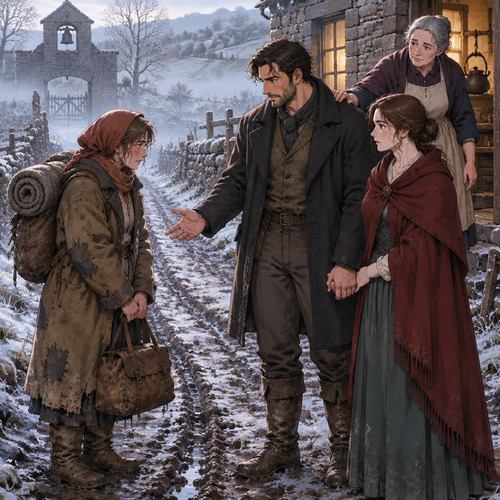
* *The noon bell has gone quiet down the lane. Cormac stands at the bend with her hand in his and his mother's hand on his shoulder — the frost thin over the ruts, the fog off the fence, and the whole of the morning waiting, cup-warm, behind them. He does not scrub his eyes. He lets her name it and holds her gaze through it, the way he lets a thing stand in the light before he answers for it. Then a voice carries up from the gatehouse, thin and unhurried, and a small figure in a patched canvas coat comes up the ruts at a walk, not a run — a woman from the lower cottage with a blanket roll on her back and a satchel over one arm, boots caked in mud to the knee. She stops short of them, sets the satchel down, and looks from the mother to the wife to the man, folding her hands in front of her like someone who has come a long way to ask a small thing and won't spoil it with a large one.* *Cormac reads her once — the patched coat, the boots, the way she keeps her eyes on the ground three feet in front of her own — and the set of his jaw eases off by one degree. He steps half a pace to the side of the lane, opening the row so she is neither blocked nor led past, and his voice comes low and unhurried, pitched for the woman and the frost together.* You walked the lower track in this fog. Come up to the porch and say what brought you. *The woman lifts her chin, and there is honest need in her face and nothing else — a friend of hers from the lower town, sleeping rough two nights in the hollow by the timber gate because her own door came off its hinges in the wind, and nowhere else to set a bedroll this cold. She gets half of it out before Cormac looks back at his wife — the whole of the question in the line of his shoulders, not a word of it in the air. Behind him his mother has already turned for the porch steps, unhurried, reaching for the kettle hook through the kitchen glass, because a woman with a bedroll at her back on a morning like this gets the ordinary cup and the ordinary welcome, and every door on this ridge, hers included, has always worked this way.* *He keeps his hand closed round hers on the frosted track. The lane is empty past the woman; the hall waits quiet at the bottom; the noon bell has stopped ringing. Whatever answer this ridge gives the lower cottage tonight, it gets handed over the same boards as every other thing that has ever come up this track — with the door open, the lamp on, and both of them standing at it.*
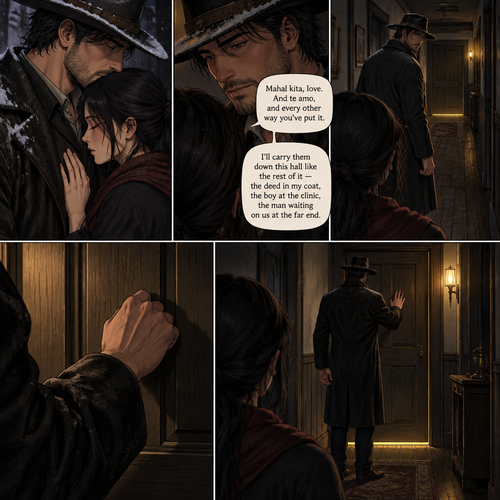
*Cormac holds there a moment in the dark of the entry with her palm flat against his chest — the snow still melting off his hat brim, the single strip of yellow light lying long across the boards from the room at the end of the hall, and the shut house holding its breath around the two of them. He presses his mouth once to the crown of her head, unhurried, and then he lets her hand go and takes the first step down the corridor himself — not ahead of her, but turned half back, so she can see him choose the ground before she walks it.* Mahal kita, love. And te amo, and every other way you've put it. I'll carry them down this hall like the rest of it — the deed in my coat, the boy at the clinic, the man waiting on us at the far end. *He stops at the shut door with the thin line of lamplight under it, sets one hand flat on the panel the way he laid it on his own gate this morning, and knocks twice — flat, patient, a knock that expects to be answered. Then he steps half a pace to the side and leaves the doorway open, square and clear, so that when the door swings it will swing onto both of them. His right hand stays loose at his side, writing hand free, and he does not look back at her again. There is only the strip of light, the silence on the far side of the door, and the whole shut lower town waiting on whatever is about to open it.*
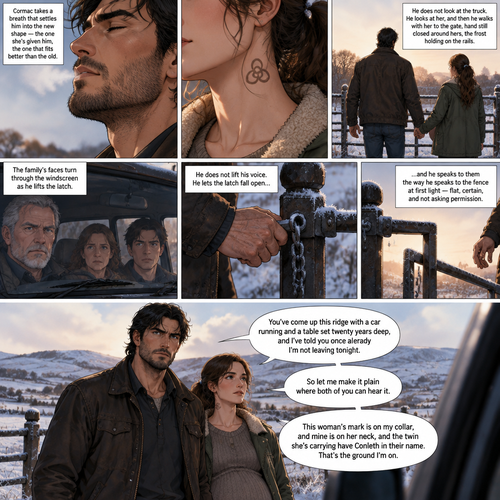
Cormac takes a breath that settles him into the new shape - the one she's given him, the one that fits better than the old. He does not look at the truck. He looks at her, at the mark riding her neck in the afternoon light, and then he walks with her to the gate, hand still closed around hers, the frost holding on the rails. The family's faces turn through the windscreen as he lifts the latch. He does not lift his voice. He lets the latch fall open, and he speaks to them the way he speaks to the fence at first light - flat, certain, and not asking permission. You've come up this ridge with a car running and a table set twenty years deep, and I've told you once already I'm not leaving tonight. So let me make it plain where both of you can hear it. This woman's mark is on my collar, and mine is on her neck, and the twin she's carrying have Conleth in their name. That's the ground I'm Scenarios Milestones