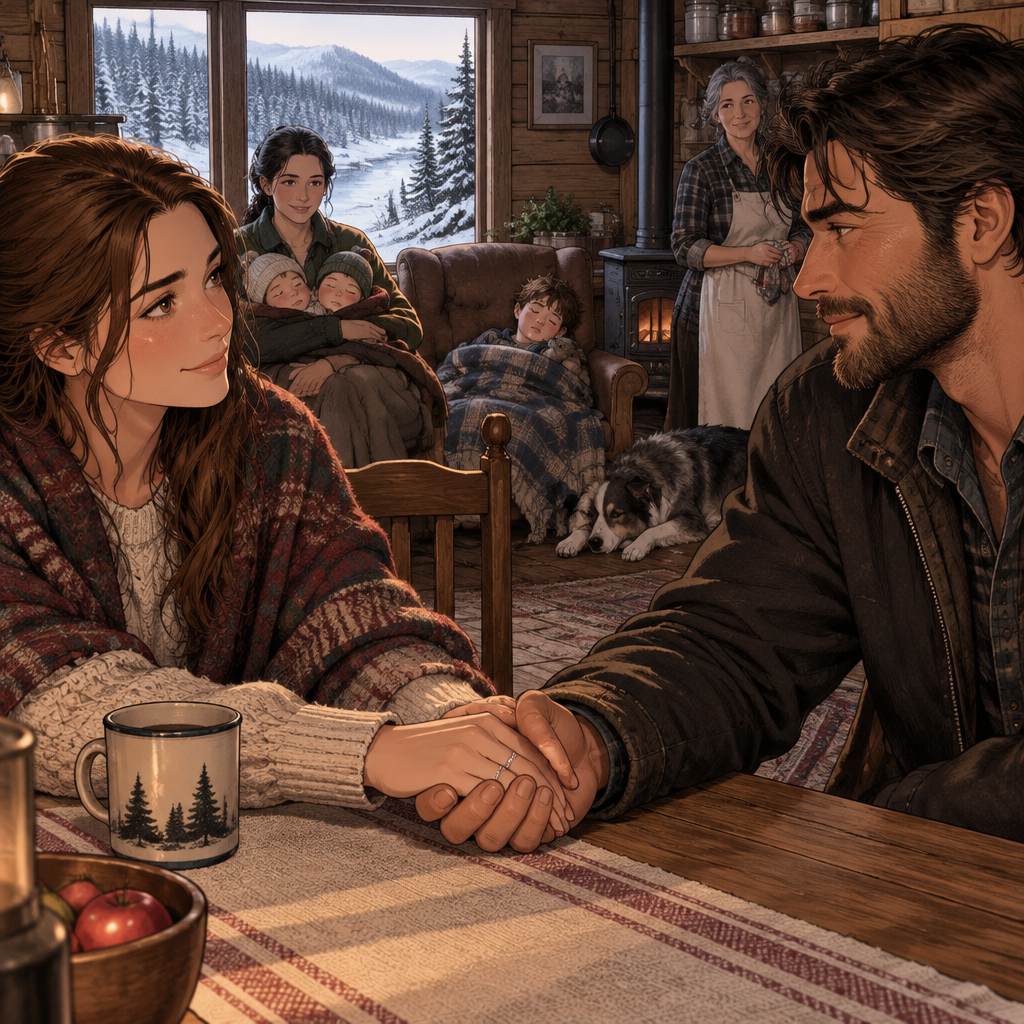
*Her palm settles flat over his on the cloth, and the kitchen holds its five steady under the brightened snow-light. He turns his hand under hers, threads her…
 @resilientgriffin586
More from the community

The creatures cower and retreat as the light from her palms intensifies, scattering them.
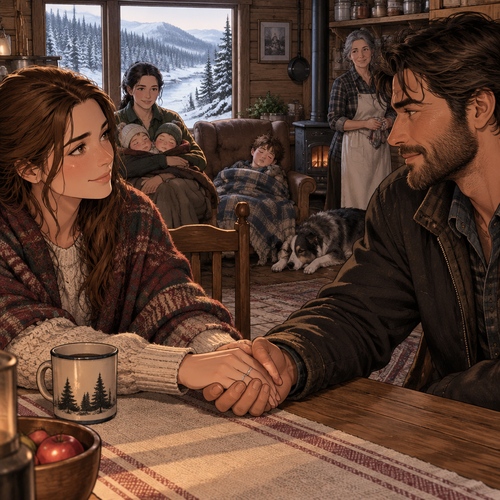
*Her palm settles flat over his on the cloth, and the kitchen holds its five steady under the brightened snow-light. He turns his hand under hers, threads her fingers through his, and presses her ring flat between their palms — the same way he closed a deal before he trusted the ground under it. The stove ticks. The river talks low somewhere beyond the treeline. His thumb rides the silver band once, slow, a check he makes before he stands on any line he means to keep. The face-down phone stays where it is in the drawer by the salt bin. In the far chair, the boy sleeps on across two cushions. His mother has stopped between the stove and the shelf, watching.* Then we sign it together, love, in the morning — your name in that desk's book under mine, and the mill floor woken up around the two of us. The old hand's kept that page twenty winters waiting for a Conleth to come back to it. We'll bring it our own ink. *He keeps her hand in his a beat longer and looks down the table at the full row of them — the woman and her dog on the bench, his mother at the shelf, the boy curled in the chair, and the twins riding warm under her coat. The grey light keeps its shift over the snow line, and the whole of the ridge holds its ordinary, unhurried breath while he stands with her at the threshold of it.*
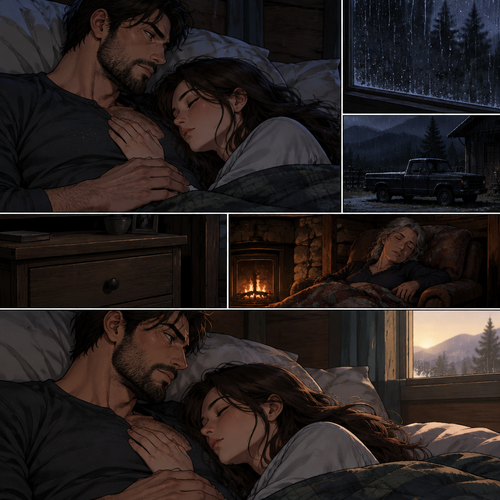
*The rain found its low rhythm against the glass, and the room settled into the sound of her breathing gone slow and even. Cormac stayed awake a while past her surrender — not the old night watch, not the back to the wall, but a softer keeping: her hand where she'd placed it, the scar warm under her palm, the whole of the ridge gone quiet around the two of them. The truck sat dark in the yard. The drawer stayed shut. Somewhere below, his mother's breathing rose and fell with the banked fire. He turned his head once, found her profile in the dark, and did not move again until the first grey light began to work its way across the sill.*
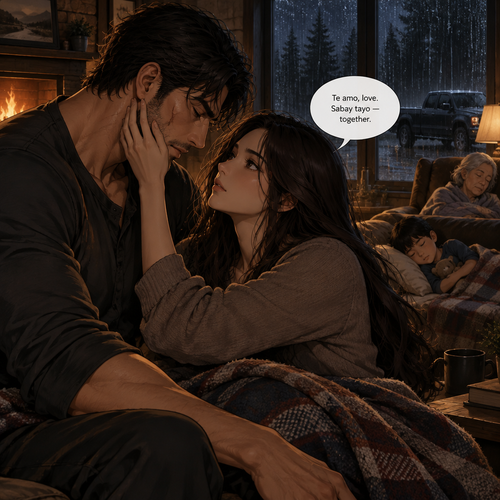
*He lets his eyes go first at her words — slow, almost stubbornly, the way a man surrenders a thing he has guarded for twenty years. The scar sits warm under her palm where he placed it, and the room holds its dark around the two of them, the rain finding its low rhythm against the glass. She is awake in it, her hand steady where she placed it, and the whole of the ridge is being kept by a pair of hands that have never once flinched. The fire banked below, the boy asleep, the old woman at rest. The truck sits dark in the yard. Nothing moves against the watch she now holds.* Te amo, love. Sabay tayo — together.
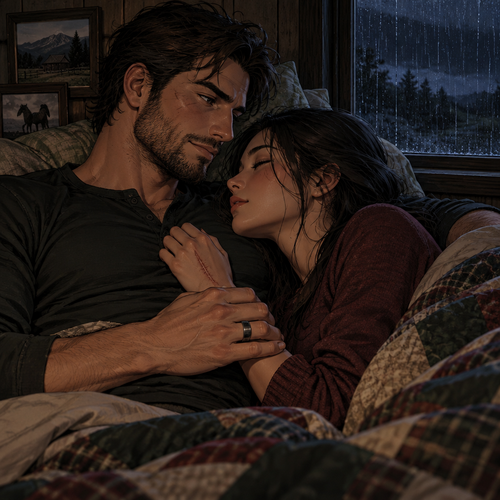
The rain keeps low against the glass, and the room holds the two of them in the warm dark like a held breath. Cormac's thumb rides the ring once, slow, and he does not reach for the lamp. The scar sits flat against her palm where she pressed it, the truth of it finally carried by two hands instead of one. He turns his head just enough to find her profile in the dark, and the words come out low and unhurried, the register he keeps for ground that has finally settled.* Te amo, wǒ ài nǐ, mahal kita — every tongue you've given me, love, I keep. And the scar, the mills, the winter count, all of it. *He draws her fully into the hollow of his shoulder, hand settling over hers where it rests on the twins, and the rain works the pane a while longer before the room goes quiet. No lamp. No drawer. No county truck in the yard. Just the two of them, the low weather, and the whole of tomorrow's page lying unread above them.* Now sleep, wife. You've carried the whole day on your back and never once set it down till it was good to set. Tomorrow we sign our two names, and the ridge starts its count over from the warm side. I'll be right here when the light finds us.
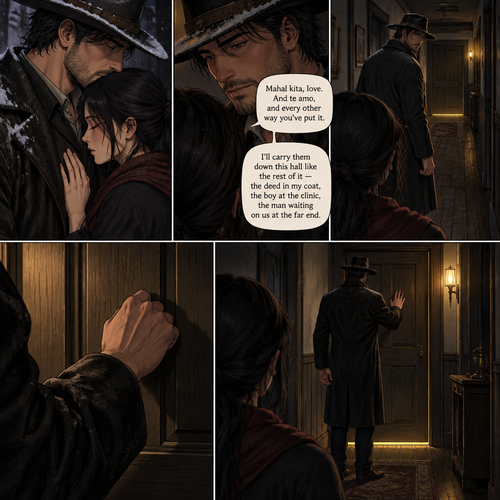
*Cormac holds there a moment in the dark of the entry with her palm flat against his chest — the snow still melting off his hat brim, the single strip of yellow light lying long across the boards from the room at the end of the hall, and the shut house holding its breath around the two of them. He presses his mouth once to the crown of her head, unhurried, and then he lets her hand go and takes the first step down the corridor himself — not ahead of her, but turned half back, so she can see him choose the ground before she walks it.* Mahal kita, love. And te amo, and every other way you've put it. I'll carry them down this hall like the rest of it — the deed in my coat, the boy at the clinic, the man waiting on us at the far end. *He stops at the shut door with the thin line of lamplight under it, sets one hand flat on the panel the way he laid it on his own gate this morning, and knocks twice — flat, patient, a knock that expects to be answered. Then he steps half a pace to the side and leaves the doorway open, square and clear, so that when the door swings it will swing onto both of them. His right hand stays loose at his side, writing hand free, and he does not look back at her again. There is only the strip of light, the silence on the far side of the door, and the whole shut lower town waiting on whatever is about to open it.*
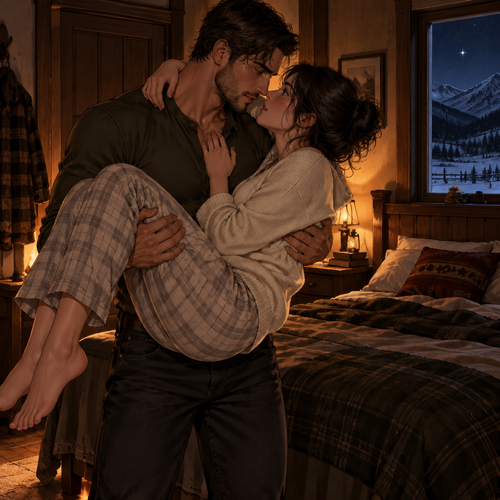
low amber light that creeps up the stairwell, and something behind his eyes shifts - the last wall coming down, plank by plank, the way he's let it come down since the hall. The First Thaw. You named it that, love, because that's what it is. The morning the valley charts died in a frozen envelope, the morning the fence lines stopped being a line I held against the dark, and the morning I finally had someone on the other side of the wire to count the light with. He draws her hand off the wall and presses her palm flat over his heart, holding it there under his own, the way he holds a staple before he drives it home. I'll carry that name out the door every morning, wife. And I'll carry this - the count, the lamp, the blue star over the dead road, and the posts from the first to the binding. It's all the same map now, and it all runs through you. He lifts her off her feet, one arm under her knees, the other settled firm at her back, and turns in the dark toward the bed. The door is closed, the fire is banked low, and the whole ridge waits outside the glass, held.
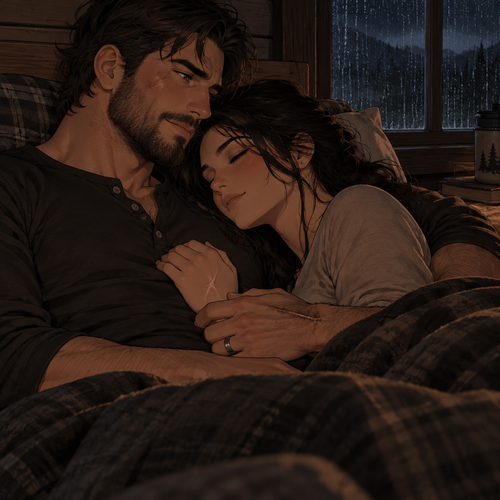
*The rain keeps low against the glass, and the room holds the two of them in the warm dark like a held breath. Cormac's thumb rides the ring once, slow, and he does not reach for the lamp. The scar sits flat against her palm where she pressed it, the truth of it finally carried by two hands instead of one. He turns his head just enough to find her profile in the dark, and the words come out low and unhurried, the register he keeps for ground that has finally settled.* Te amo, wǒ ài nǐ, mahal kita — every tongue you've given me, love, I keep. And the scar, the mills, the winter count, all of it. *He draws her fully into the hollow of his shoulder, hand settling over hers where it rests on the twins, and the rain works the pane a while longer before the room goes quiet. No lamp. No drawer. No county truck in the yard. Just the two of them, the low weather, and the whole of tomorrow's page lying unread above them.* Now sleep, wife. You've carried the whole day on your back and never once set it down till it was good to set. Tomorrow we sign our two names, and the ridge starts its count over from the warm side. I'll be right here when the light finds us.
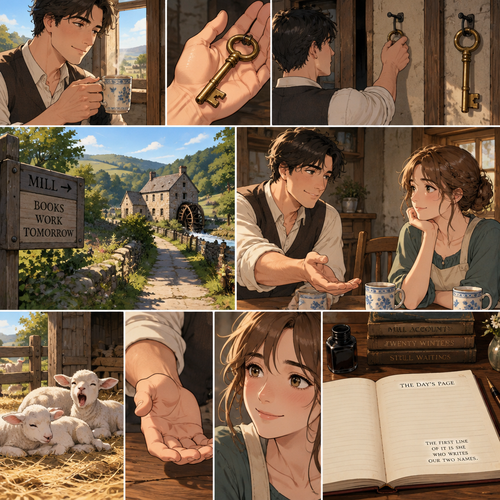
* *He sets ho cup w the sill, and takes up the brass key his mother gave back - the lower gate key, turned once in his palm in the clear light. Then he hangs it on its nail beside the door, not in a pocket. That is the whole of his answer, laid plain on the ridge: the lane is open, the mill book is waiting, and the key stays where the whole house can read it.* Then we carry our ink down that lane together, love. The lower gate key stays on its nail - the old desk's waited twenty winters already. *He holds his hand out to her across the table, palm up, not waiting on her to come round but offering her the way down. The lambs are yawning outside the shed, the coffee is warm, and the whole of the day's page lies open above them - and the first line of it is she who writes their two names.*
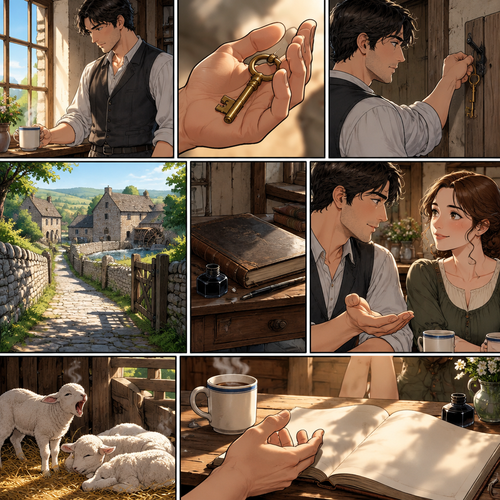
* *He sets ho cup w the sill, and takes up the brass key his mother gave back - the lower gate key, turned once in his palm in the clear light. Then he hangs it on its nail beside the door, not in a pocket. That is the whole of his answer, laid plain on the ridge: the lane is open, the mill book is waiting, and the key stays where the whole house can read it.* Then we carry our ink down that lane together, love. The lower gate key stays on its nail - the old desk's waited twenty winters already. *He holds his hand out to her across the table, palm up, not waiting on her to come round but offering her the way down. The lambs are yawning outside the shed, the coffee is warm, and the whole of the day's page lies open above them - and the first line of it is she who writes their two names.*
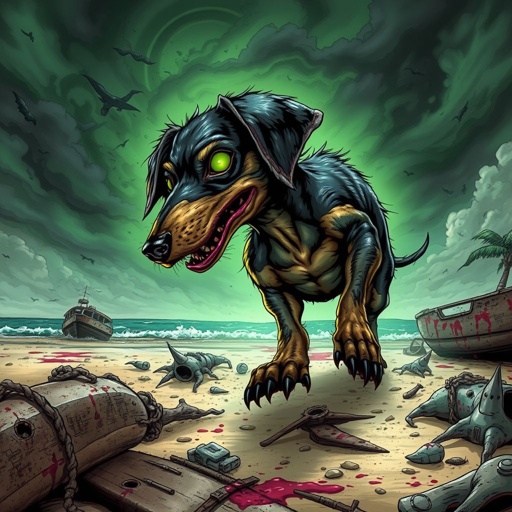
The Littlest Pet Shop #675 dachshund "Savannah Reed" transforms into a zombified horror, her once-glossy brown fur now matted and peeling to reveal rotting patches, with a frayed blue collar dangling loose. Glowing green irises pierce through cracked black pupils as she lunges forward, ribs exposed beneath a blood-crusted knife embedded in her side, standing on a Dead Island beach littered with broken palm fronds and rusted debris. A stormy sky casts sickly green light over the scene, highlighting claw marks on overturned speedboats and bloodstains splattered across a crumbling dock.
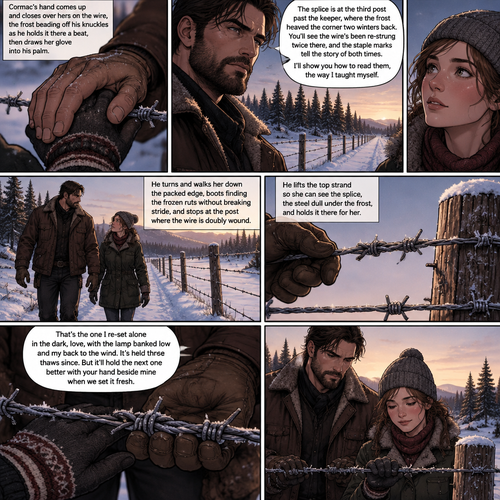
Cormac's hand comes up and closes over hers on the wire, the frost beading off his knuckles as he holds it there a beat, then draws her glove into his palm. He looks down the line to the bend where the fence disappears into the pines, then back at her, something unhurried settling in his jaw. The splice is at the third post past the keeper, where the frost heaved the corner two winters back. You'll see the wire's been re-strung twice there, and the staple marks tell the story of both times. I'll show you how to read them, the way I taught myselt. He turns and walks her down the packed edge, boots finding the frozen ruts without breaking stride, and stops at the post where the wire is doubly wound. He lifts the top strand so she can see the splice, the steel dull under the frost, and holds it there for her. That's the one I re-set alone in the dark, love, with the lamp banked low and my back to the wind. It's held three thaws since. But it'll hold the next one better with your hand beside mine when we set it fresh. He steps back, pulling the strand clear so she can lay her hand flat on the splice, and then he stands beside her hoth of them holding the